Showing posts with label Archive. Show all posts

8.03.2010

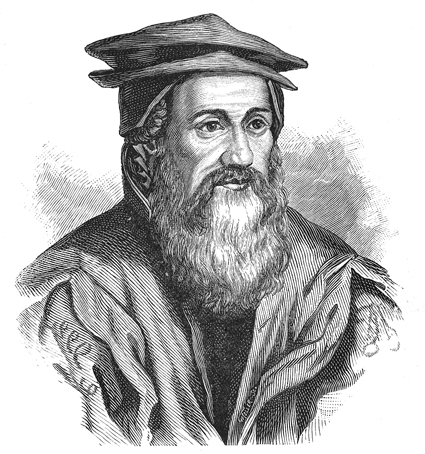
Conrad Gesner's Historiae animalium

Conrad Gesner [26 March 1516 – 
13 December 1565]

 Gesner was most noted in his day as a physician, botanist, and Classical linguist. Throughout his life he was interested in biology and collected specimens and descriptions of wildlife through travel and extensive correspondence with other scholars. His approach to research centered upon four tenets: observation, dissection, travel to distant lands, and accurate description. This emergent empirical approach was new to Renaissance scholars, who usually relied entirely upon Classical writers for their research.
His Historiae animalium (Zürich, 1551-1587; "Studies on Animals") is considered to be the first modern zoological work. Building a bridge between ancient, medieval, and modern science, he chronicles data from old sources, such as The Old Testament, Aristotle and medieval bestiaries, and adds his own observations, creating a new, comprehensive description of the Animal Kingdom. In what is the first attempt by anyone to describe many of the animals accurately, the book is illustrated with hand-colored woodcuts drawn from personal observations by Gesner and his colleagues.

5.17.2010

Words I Learned Today from the Phrontistery


Artist: Joseph Kosuth. Hirshhorn Museum, Washington, D.C.

I am free now to be academically indulgent and just because I found a whole bunch of words today related to colo(u)r. The Phrontistery [n. a thinking place; Gr phrontisterion from phrontistes a thinker, from phroneein to think] is a veritable shrine to lexical intrepidity, claiming the International House of Logorrhea, a dictionary of obscure words, the Compendium of Lost Words, and "many other glossaries, word lists, essays". In short, loads of etymological related goodness. 

One treat is a list of 168 of the most antiquated, recherché, and useful terms describing color that stretches way beyond that of your more common, pedestrian rainbows. Selected favs:

Amaranthine : a dark reddish purple color; eternal, infinite; of or related to the amaranth plant; of an imaginary flower that never fades

Eau-de-nil : a pale yellowish green color (like the Nile, presumably)

Ferruginous : rust colored; containing iron; brown approaching yellow

Gamboge : a strong yellow color; partially transparent dark mustard yellow pigment

Greige : hilariously, it's a color "between gray and beige, closely akin to the [even more blandly, accurately named] taupe"

Lurid : doesn't just mean "unnaturally or unpleasantly vivid in color" but especially when applied to red-yellow and yellow-brown mixtures (which is why an alternate meaning of lurid is "shining with an unnatural red glow as of fire seen through smoke; 'a lurid sunset'; "lurid flames'")

Umber : brownish red; obtained from natural clays variously colored by the oxides of iron and manganese


Rhodopsin : "visual purple" further defined as "a red photopigment in the retinal rods of vertebrates"

Vermeil : bright scarlet red or vermillion color; gilded silver

Viridian : chrome green; a bluish green pigment made from a foam of chromic oxide

I'm sure there will be a mindmap accompanying this post someday, since vocabulary building is one of my favorite applications of mindmaps. Watch for it maybehaps. [P.S. -a bonus, very thorough etymology dictionary. Enjoy seeing how mindblowingly embedded language is in itself. ]

3.03.2010

LibriVox Helps Us Free the Words


If you're like me, you have a long memory for the really good things about childhood: pajamas, PB&J, getting and staying dirty, and being read to before bed. I've never tired of falling into the rhythm of a well-told story (except for, you know, when I actually pass out) and I see no reason to stop now that I'm "an adult". Especially when the internet and its vast army of friendly strangers are there to lull you into slumber! 

It's way less creepy than I just made it sound. It's LibriVox, a collaborative project built around the concept of people reading to one another. Its mission is to record audiobooks of all public domain works in any and every language. Anyone with a voice and a microphone can play a part.

From the few that I am trying out ("The Machine Stops", by E. M. Forster; "2 B R 0 2 B" by Vonnegut; selections from Don Quixote; et al.), what the production quality lacks in terms of "feeling finished" it often makes up for by being simply more interesting than most hyper-polished audio projects - that is, sometimes they are real gems, found for free, that capture a real feel for the text. Sometimes they're not the most spot on. It's that chance that's part of the appeal. I'm considering applying my cartoonishly deep voice towards H.P. Lovecraft or any number of Sherlock Holmes tales which are close to my heart. I'll keep you posted.

Browse the catalog or subscribe to their podcast.

Even better, learn how to contribute yourself.

11.30.2009

Shorpy: Historic Photo Archive


I have never been to Detroit, but I'm pretty sure Woodward Avenue doesn't look just like it did in 1917. Pictured here, the poor Detroiters mill about completely unsuspecting of prohibition's looming bitch slap.
More old-timey aesthetics (in the form of RSS Feeds and a Daily Top-5) to be found at Shorpy.

11.16.2009

Galactic Center Composite Proves Educational and Psychedelic

Via the Chandra X-Ray Observatory
Blue and violet represent the X-ray observations of Chandra. X-rays are emitted by gas heated to millions of degrees by stellar explosions and by outflows from the supermassive black hole in the galaxy's center. The bright blue blob on the left side of the full field image is emission from a double star system containing either a neutron star or a black hole.

Yellow areas represent the near-infrared of Hubble. They outline the energetic regions where stars are being born as well as reveal hundreds of thousands of stars.

And red represents the infrared observations of Spitzer. The radiation and winds from stars create glowing dust clouds that exhibit complex structures from compact, spherical globules to long, stringy filaments.
Collectively they give us the most dramatically trippy window into the heart of the milky way that has ever been captured.

11.04.2009

Imgur - Free, Anonymous Image Sharing


I couldn't tell you where this is, but it doesn't matter anyway. The view is sufficient.

Upload on Imgur - |imijər|
Surf the Gallery