


 |
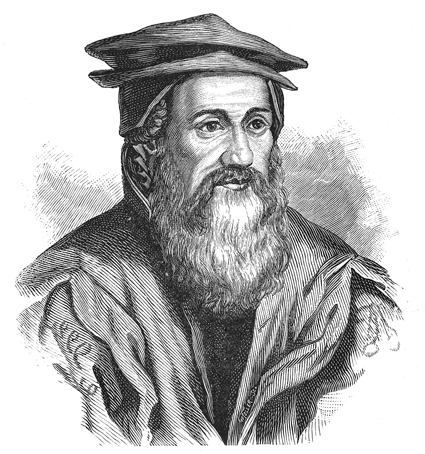
| Conrad Gesner [26 March 1516 – 13 December 1565] |
Gesner was most noted in his day as a physician, botanist, and Classical linguist. Throughout his life he was interested in biology and collected specimens and descriptions of wildlife through travel and extensive correspondence with other scholars. His approach to research centered upon four tenets: observation, dissection, travel to distant lands, and accurate description. This emergent empirical approach was new to Renaissance scholars, who usually relied entirely upon Classical writers for their research.

His Historiae animalium (Zürich, 1551-1587; "Studies on Animals") is considered to be the first modern zoological work. Building a bridge between ancient, medieval, and modern science, he chronicles data from old sources, such as The Old Testament, Aristotle and medieval bestiaries, and adds his own observations, creating a new, comprehensive description of the Animal Kingdom. In what is the first attempt by anyone to describe many of the animals accurately, the book is illustrated with hand-colored woodcuts drawn from personal observations by Gesner and his colleagues.


